The Croods: A New Age
Vibe
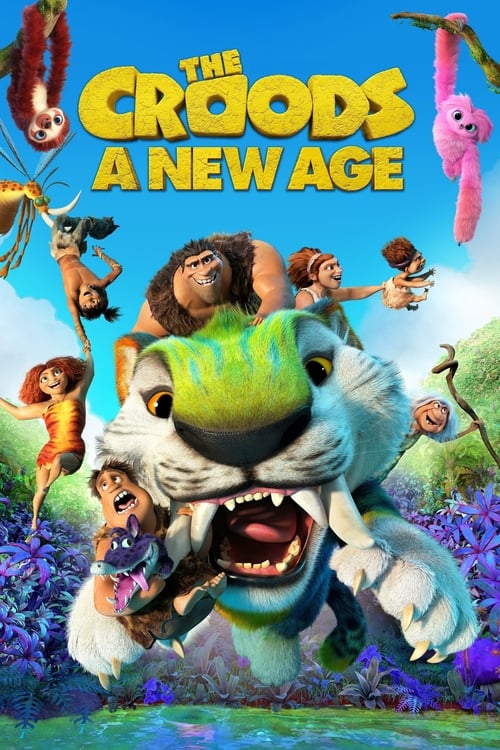
The Croods: A New Age finds the prehistoric family discovering a walled utopia maintained by the Bettermans, a more 'evolved' family who look down on the Croods while secretly needing their resilience. Directed by Joel Crawford, the sequel is a warmer and more focused film than a seven-year gap between productions might suggest — the Betterman family's passive-aggressive superiority gives the comedy a sharp social edge, and the eventual alliance between the two families earns its moment.
Watch for
- The Betterman family as comic antagonists, whose combination of privilege, condescension, and genuine good intentions makes them both funny and specific.
- Eep and Dawn's friendship, which develops parallel to the parental conflict and is given its own proper arc.
- The film's creature design continuity with the original — the same inventive hybrid-animal aesthetic, pushed into new territory.
- The climactic action sequence, which is more inventive than the sequel premise suggests.
- The film's climactic resolution — the Bettermans and Croods choosing to build together rather than maintain the separation their different development levels make comfortable for both parties — which the film earns by taking both families' legitimate limitations seriously rather than making either simply wrong about the world, letting the alliance feel chosen rather than inevitable.
Production notes
Directed by Joel Crawford, who had spent years as a story artist on DreamWorks Animation productions before taking on his first feature. The film was in production during the COVID-19 pandemic, requiring the entire production team to work remotely for substantial portions of the schedule. Peter Dinklage and Leslie Mann joined the cast as Phil and Hope Betterman — characters designed to embody a specific contemporary type: socially progressive, materially privileged, genuinely well-intentioned, and completely unaware of how condescending their helpfulness reads to the people they have decided to improve. The seven-year gap between the original and sequel required the creature design team to develop new hybrid animals consistent with the first film's aesthetic while demonstrating creative evolution.
Trivia
- The film was released during the COVID-19 pandemic in November 2020, significantly impacting its theatrical performance.
- Peter Dinklage and Leslie Mann joined the cast as Phil and Hope Betterman — characters designed to embody a specific kind of well-meaning but condescending progressivism.
- Joel Crawford, the film's director, had previously worked as a story artist on multiple DreamWorks Animation productions before taking on his first feature.
- The Croods: A New Age earned $170 million worldwide under pandemic conditions, a result considered strong given the theater closures.
- The Betterman compound — its walled garden, its controlled agriculture, its curated self-sufficiency — was deliberately designed to resemble a specific contemporary idealized domestic aesthetic: the kind of perfectly curated homestead that represents a certain class aspiration. The production team consulted with anthropologists about what a more developed prehistoric culture would actually look like, then exaggerated the most recognizable contemporary aspects to make the social commentary immediate without becoming didactic.
Legacy
The Croods: A New Age earned $170 million worldwide under significantly challenged theatrical conditions — released during ongoing pandemic restrictions in November 2020, with theater capacity limited in most markets. The result was considered strong given those constraints. The film's commercial success set up a third installment and demonstrated the franchise's continued audience loyalty seven years after the original. The Betterman family's passive-aggressive superiority gave the film a social comedy edge that made it feel more contemporary than its prehistoric setting suggests, and Joel Crawford's debut as a feature director demonstrated the creative depth DreamWorks Animation had developed in its story department.