Kung Fu Panda
Vibe
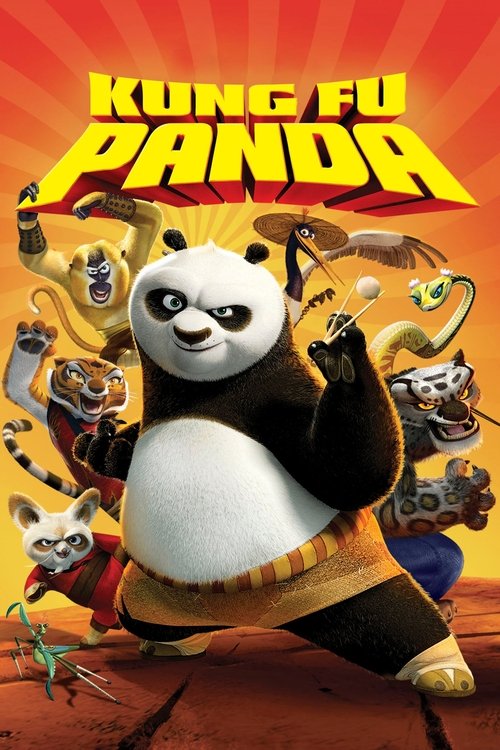
Kung Fu Panda follows Po, a clumsy panda who worships kung fu and is improbably selected as the Dragon Warrior — destined to defeat the terrifying snow leopard Tai Lung — in a film that takes its martial arts philosophy completely seriously. Directed by Mark Osborne and John Stevenson, it is one of DreamWorks Animation's most carefully crafted productions: visually stunning, thematically sincere about self-belief, and carried by Jack Black's performance as Po — funny, earnest, and unexpectedly moving in the film's quieter moments. Its central lesson is delivered simultaneously through the main plot and the subplot about Po's noodle-shop father — a structural elegance that makes the film more satisfying on every subsequent viewing.
Watch for
- The film's production design, which layers classical Chinese ink painting aesthetics with Wuxia film compositions to create a world that feels genuinely grounded in Chinese visual tradition.
- Master Oogway's central teaching about the present moment, delivered by a character who has clearly actually lived it — wisdom earned, not borrowed.
- The reveal of the Dragon Scroll and Mr. Ping's secret ingredient as parallel narrative payoffs — the film's thesis delivered twice, simultaneously, from two different directions.
- Tai Lung as a villain with genuine grievance — his backstory involves real injury and betrayal, making him the most psychologically complex antagonist in the franchise.
- Mr. Ping's secret-ingredient speech in the final act — running parallel to the Dragon Scroll reveal — delivers the film's central thesis from two directions simultaneously: Po learns there is no secret ingredient to being the Dragon Warrior at exactly the moment he learns there is no secret ingredient in his father's soup, and the two revelations illuminate each other perfectly.
Production notes
Directors Mark Osborne and John Stevenson led research trips to China before beginning production, studying landscape painting, temple architecture, martial arts philosophy, and classical ink painting traditions to develop a visual language engaging seriously with Chinese artistic culture. Background paintings referenced Song dynasty landscape art; the production design team built an extensive reference library of Chinese art history before translating those influences into the film's specific aesthetic. The voice cast — Jack Black, Dustin Hoffman, Angelina Jolie, Ian McShane, Lucy Liu, Seth Rogen, Jackie Chan, David Cross — was among the most star-studded in animated film history, assembled specifically to give the film the commercial weight its $130 million budget required. The film's Chinese reception sparked a famous cultural debate about why an American studio had produced a more authentically Chinese film than Chinese studios were making — an industry discussion that shaped DreamWorks Animation's China strategy for the following decade.
Trivia
- The directors traveled to China on research trips before production design began — an unusual commitment to cultural authenticity that was central to the film's reception.
- Dustin Hoffman based Shifu on a combination of Yoda and his observations of actual kung fu masters, focusing on the paradox of a teacher humbled by his own philosophy.
- The film was the first DreamWorks Animation release simultaneously released in China, where it sparked a famous cultural debate about why American filmmakers seemed to understand Chinese aesthetics better than Chinese filmmakers did.
- Ian McShane was cast as Tai Lung because the directors wanted a villain whose physical threat came entirely through voice — McShane's low, deliberate delivery established danger before the character appeared on screen.
- Tai Lung was designed as a snow leopard — a specific choice driven by the character's backstory as someone who trained in an alpine monastery and developed his abilities in cold, isolated conditions. The species selection gave the character's movement vocabulary a quality that contrasted visually with the rounder, warmer movements of the panda protagonist, the animators describing the contrast as reflecting the difference between someone who had everything given to them and someone who earned their power through unwitnessed struggle.
Legacy
Kung Fu Panda earned $632 million worldwide and won the Annie Award for Outstanding Achievement for Animated Feature. Its Chinese reception sparked a genuine industry reckoning in China about the relationship between cultural heritage and contemporary commercial filmmaking, with the film screened and discussed in Chinese film schools as a case study in how external perspectives can sometimes illuminate a culture's own traditions. The franchise it launched — three sequels and a fourth film in 2024 — became the most consistently creatively excellent DreamWorks Animation franchise and the studio's most durable international commercial property. The first film's success remains the clearest evidence that the studio was capable of genuine artistic ambition when the creative leadership committed to cultural authenticity over surface appropriation.