How to Train Your Dragon 2
Vibe
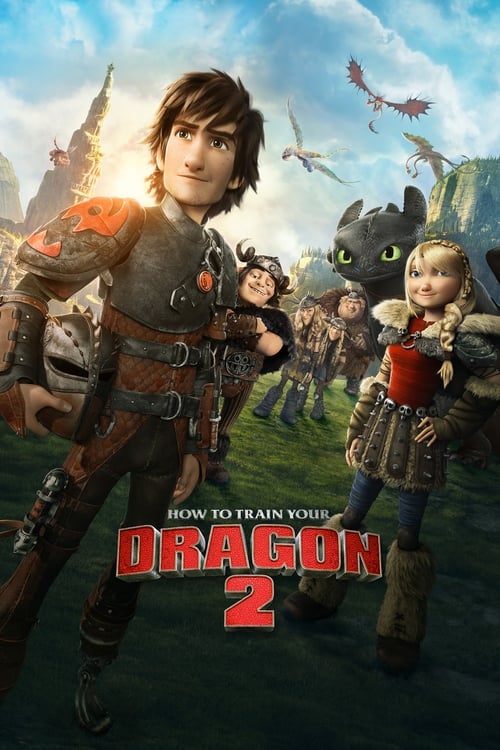
How to Train Your Dragon 2 finds Hiccup five years on — exploring the world beyond Berk as the village prepares to expand dragon training, while a warlord named Drago is building a dragon army that will require a confrontation Hiccup is not ready for. Directed by Dean DeBlois, the sequel is a rare franchise continuation that genuinely deepens its world, its characters, and its emotional stakes — a film about growing up that honors what growing up actually costs, including a loss in its second act that most animated sequels would not dare to attempt.
Watch for
- Stoick's arc across the film — particularly the reunion sequence, which is the most emotionally generous scene in the entire trilogy.
- The second act's major loss, which the film honors without softening or rushing past — a moment of genuine grief given the space it deserves.
- The expanded world of dragon riders and dragon species, which makes Berk feel like a civilization rather than just a setting.
- Cate Blanchett as Valka, whose introduction reframes Hiccup's entire backstory while giving him someone to learn from who sees the world the way he does.
- The dragon racing sequences in the film's early sections, which establish how completely Berk has been transformed by the events of the first film — the village rebuilt from the ground up around dragon partnership — making the world feel genuinely consequential and giving the threat of Drago's dragon army something real to destroy.
Production notes
Director Dean DeBlois committed to making the sequel a genuine emotional escalation rather than a repetition of original beats — specifically to confront Hiccup with the weight of leadership and the cost of the choices the first film set in motion. John Powell returned to compose, working with a larger orchestra and more complex emotional palette. Cate Blanchett joined as Valka — a character who had been living with dragons for twenty years and whose way of being in the world had completely transformed — and her performance creates an immediate sense of someone whose humanity has been expanded rather than diminished by wildness. The film's major second-act loss was included over significant studio hesitation, with DeBlois insisting that the scene was essential to proving the film was serious about its consequences. The production expanded the dragon species substantially, creating dozens of new designs to populate the world beyond Berk.
Trivia
- Dean DeBlois insisted on including the film's major second-act loss despite studio hesitation — he has said the scene was essential to proving the film was serious about its consequences.
- Cate Blanchett was cast as Valka partly because the directors wanted someone who could convey both wildness and maternal warmth in equal measure.
- The film received an Academy Award nomination for Best Animated Feature, losing to Big Hero 6.
- How to Train Your Dragon 2 earned $621 million worldwide, slightly outgrossing the original.
- The reunion sequence between Stoick and Valka — twenty years apart — was identified as the film's emotional center from the earliest development stages. The sequence required careful coordination between voice performances and animation to ensure the characters' physical behavior reflected the specific emotional complexity of recognizing someone changed by two decades of different life. John Powell composed the music for the sequence before the voice performances were recorded, and the actors were asked to respond to it.
Legacy
How to Train Your Dragon 2 earned $621 million worldwide and is considered by many critics and audiences to be the strongest entry in the trilogy — a film about leadership, grief, and the cost of the choices the first film made possible. Its willingness to kill a central character and honor the grief that follows without rushing past it set a standard for animated franchise storytelling that the medium rarely matches. Dean DeBlois's commitment to the trilogy as a complete creative statement — evident in how the second film honors and complicates the first's achievements — was rewarded by a third film in 2019 completing the arc with comparable emotional intelligence. The trilogy as a unit is the strongest sustained achievement in DreamWorks Animation's history.