Captain Underpants: The First Epic Movie
Vibe
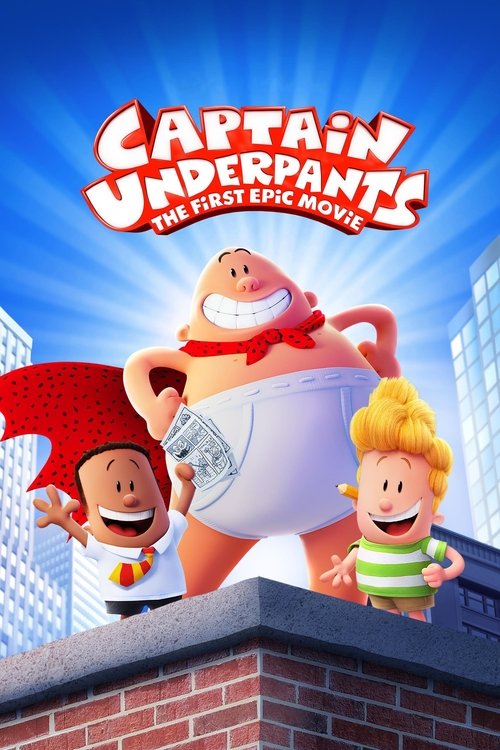
Captain Underpants: The First Epic Movie follows George and Harold, two fourth-grade best friends and amateur comic book creators who accidentally hypnotize their humorless principal into believing he is Captain Underpants, their own superhero creation. Directed by David Soren and based on Dav Pilkey's phenomenally popular children's book series, the film captures Pilkey's anarchic energy and his genuine respect for the creative logic of children — the friendship between George and Harold is the emotional center, and everything including the superhero comedy exists to serve it.
Watch for
- The film's willingness to use every visual format — traditional animation, sock puppets, flip-book animation — to honor the book series' own layered visual storytelling.
- The friendship between George and Harold, which is the real subject of the film and is handled with genuine warmth.
- Professor Poopypants as an antagonist, whose plan to eliminate laughter is both completely absurd and the film's most emotionally specific villain motivation.
- The meta-commentary on the creative process and the importance of finding your people — a theme that Pilkey built into the books from the beginning.
- The Flip-O-Rama sequences, which use genuine flip-book style animation to honor the book series' own interactive storytelling device — a formal tribute to how the books were actually experienced by their readers rather than simply adapting the story — demonstrating that the adaptation understood Pilkey's medium and relationship with his audience, not just his characters.
Production notes
Based on Dav Pilkey's Captain Underpants book series, which has sold over 80 million copies worldwide and was among the most frequently banned books in American library systems — a distinction the film wears as a mark of honor. Pilkey was closely involved in development after years of resisting adaptation, his primary concern being that a studio would smooth over the books' most genuinely disruptive elements. The adaptation used multiple animation formats — traditional CGI, flip-book animation, sock puppet sequences — to honor the books' own layered visual storytelling, which switches between prose, comic panels, and flip-book action within a single chapter. Kevin Hart and Thomas Middleditch voiced George and Harold and recorded many scenes together, with the directors crediting their genuine on-set friendship for the warmth of the central relationship that is the film's actual emotional subject.
Trivia
- Dav Pilkey was closely involved in the film's development after years of resisting adaptation, his concern being that a film might soften the books' anarchic spirit.
- Kevin Hart and Thomas Middleditch voice George and Harold and recorded many scenes together, the directors crediting their genuine on-set friendship for the warmth of the central relationship.
- The film uses multiple animation formats — traditional CGI, flip-book animation, sock puppet sequences — to honor the books' own layered visual storytelling.
- Captain Underpants earned $125 million worldwide on a $38 million budget, making it one of DreamWorks Animation's most profitable productions per dollar.
- The film's budget of approximately $38 million was one of the lowest for a major studio animated feature in years — a production efficiency that gave the film more creative freedom than larger-budget productions typically have. The relatively low budget meant the production team could take visual risks and comedic chances that a $150 million production would have subjected to more aggressive audience testing, and the film's anarchic energy reflects that freedom.
Legacy
Captain Underpants earned $125 million worldwide on a $38 million budget — one of DreamWorks Animation's most profitable productions in per-dollar terms — and was praised as one of the most faithful and spirited book-to-screen adaptations in animated film history. Its commercial efficiency demonstrated that the studio could produce acclaimed, commercially viable animated features at a fraction of its typical investment. The film's genuinely anarchic spirit — its refusal to sand down Pilkey's most disruptive comedic instincts — gave it a cult following among the book series' readers that persists years after release. Dav Pilkey's long resistance to adaptation and subsequent enthusiastic endorsement of the result has made it a model case for how adaptation should serve the source material's essential spirit.