Bee Movie
Vibe
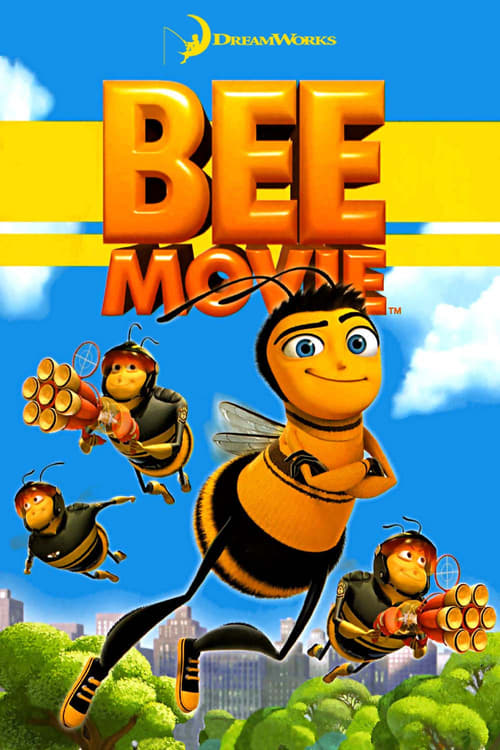
Bee Movie follows Barry B. Benson, a bee who refuses to accept a life of performing the same job forever, befriends a human florist, and ultimately sues the entire human race for stealing and selling honey without the bees' consent. Written by and starring Jerry Seinfeld, the film follows its absurd premise to more interesting destinations than it has any right to reach — part workplace comedy, part legal thriller, part ecological fable — and its subsequent life as an internet meme phenomenon has given it a cultural afterlife far exceeding its original theatrical reception.
Watch for
- The lawsuit sequence, in which Barry argues his case before the human legal system and wins — then the film follows through on the consequences with unexpected commitment.
- Seinfeld's comedic voice applied to animated family film format — the rhythm, the observation, the slight air of grievance — and how well it translates.
- The ecological strand, which takes seriously that bees stopping work would collapse global agriculture and plays that out to its logical conclusion.
- Patrick Warburton as Ken, whose mounting paranoia about Barry constitutes a subplot with its own internal arc.
- The film's ecological commitment in its final act — actually showing a world without bee pollination, with flowers dying and global food supplies failing — followed through rather than played for cute consequence, honoring the premise's real-world logic in a way that makes Barry's eventual choice feel genuinely consequential rather than predetermined.
Production notes
Originated from a joke Seinfeld pitched informally to Spielberg at a party — 'What if a bee sued the human race?' — that Seinfeld then committed to as a feature after Spielberg encouraged him to take the premise seriously. The film was Seinfeld's first major post-Seinfeld creative undertaking, taking approximately four years to develop. Seinfeld wrote the screenplay alongside Spike Feresten, Barry Marder, and Andy Robin — all writers from the television series — and was unusually involved in the animation direction for scenes featuring Barry, working closely with the directors to ensure the character's physical comedy matched his specific comedic timing. Renée Zellweger, Patrick Warburton, John Goodman, and Ray Liotta supported the cast, with Liotta playing a fictionalized version of himself as a honey brand endorser and treating his cameo with the same intensity he brought to dramatic roles. The legal premise required consultation with actual intellectual property and tort lawyers to ensure the honey lawsuit's logic was coherent.
Trivia
- The premise began as an informal joke Seinfeld pitched to Spielberg; Spielberg encouraged him to develop it seriously.
- Seinfeld insisted on voicing Barry himself and was heavily involved in directing his own character's animation.
- The film's internet meme status, which exploded years after release, has given it a cultural presence far larger than its $293 million box office suggests.
- Renée Zellweger voiced Vanessa, and the bee-human romantic tension was, by Seinfeld's own admission, intended to be deliberately unsettling.
- The legal hearing sequence — in which Barry testifies before the human court system — was the most technically difficult sequence to storyboard, requiring the production team to design a court setting accommodating both bee-scale and human-scale characters in the same frame while maintaining spatial legibility. The sequence went through multiple versions before the directors found an approach that made the visual comedy work at the level Seinfeld wanted.
Legacy
Bee Movie earned $293 million worldwide on a $150 million budget — a modest performance — and received moderate critical attention before becoming one of the most unusual afterlife stories in animated film history. Starting around 2016, the film became a massive internet meme phenomenon, the full movie sped up, remixed, and recirculated across platforms in ways the production team had never anticipated. Reconsidered through the lens of its meme life, the film's genuine absurdist sincerity — its willingness to follow a bee suing the human race to its logical ecological consequences — has been recognized as a distinctive achievement. The Bee Movie meme phenomenon has given it a cultural presence that few animated features achieve a decade after release.